

Two days is the shape a weekend takes in Kyoto — unhurried enough to feel the difference between morning light on a bamboo grove and evening shadow in a geisha alley, yet compact enough for travelers splitting a longer journey between cities. This is the itinerary for couples stealing a weekend from Osaka, first-time visitors who want more than a checklist, and anyone who suspects that the ancient capital rewards patience more than speed.
The route divides along Kyoto's natural geography. Day one traces the eastern hills — the Higashiyama corridor where Fushimi Inari's thousands of gates give way to the wooden terraces of Kiyomizu-dera, the preserved merchant lanes of Ninenzaka, and the quiet theater of Gion at dusk. Day two crosses the city to Arashiyama's river valley and bamboo groves, then north to the gilded reflection of Kinkaku-ji and the austere stones of Ryoan-ji.
What makes two days work is the rhythm it allows. You can arrive at Fushimi Inari before the crowds and still have time to sit with a bowl of matcha in Higashiyama. You can watch the bamboo sway at dawn and still reach the Golden Pavilion when midday sun sets it ablaze. The temples here were built for contemplation, not for rushing through — and a weekend gives you just enough space to remember that.
Day 1
Eastern Kyoto: Fushimi Inari & Higashiyama
Fushimi & Higashiyama
Day 2
Western & Northern Kyoto
Arashiyama & Kita-ku
Day 1
Eastern Kyoto: Fushimi Inari & Higashiyama
Fushimi & Higashiyama— Landmark Shrines & Geisha Culture
Explore eastern Kyoto's most atmospheric areas, from the vermilion gates of Fushimi Inari to the preserved streets leading to Kiyomizu-dera and the geisha district of Gion.
Eastern Kyoto unfolds along a corridor of devotion that has drawn pilgrims for over a millennium. The hills east of the Kamo River cradle some of Japan's most spiritually charged ground — from the fox deity's mountain at Fushimi Inari, where thousands of vermilion gates dissolve into forest shadow, to the wooden stage of Kiyomizu-dera suspended above a canopy of maple and cherry. Between these anchors, the Higashiyama district preserves a texture of daily life that predates the modern city: stone-paved lanes, latticed machiya townhouses, the faint percussion of wooden geta on cobblestone. By evening, the geisha quarter of Gion offers something rarer still — a living tradition where art, ritual, and hospitality merge in the soft glow of paper lanterns.
Fushimi Inari Taisha伏見稲荷大社
Experience the magic of thousands of vermilion torii gates at dawn. Hike partially up Mount Inari for panoramic views and quieter pathways.
Sunrise visits offer the best atmosphere and photos
Hike to Yotsutsuji intersection (30-45 min) for the best experience
The full summit hike takes 2-3 hours
Kiyomizu-dera Temple清水寺
This UNESCO site features a wooden stage jutting out over the hillside with panoramic views. Approach through the charming Ninenzaka and Sannenzaka streets.
Enter via the preserved streets from the south
The Otowa Waterfall has three streams for different blessings
Views are spectacular in any season
Ninenzaka & Sannenzaka二年坂・三年坂
These preserved streets lined with traditional shops and tea houses offer the perfect atmosphere for a leisurely lunch and souvenir shopping.
Stop for matcha and sweets at a traditional tea house
Find the traditional Starbucks in a renovated machiya
Browse pottery, textiles, and local crafts
Gion District祇園
Wander through Kyoto's famous geisha district. Explore Hanamikoji Street, visit Yasaka Shrine, and watch for geiko and maiko in the early evening.
Best geiko/maiko sighting time: 5-6 PM on Hanamikoji
Be respectful - no chasing or blocking for photos
Explore the quieter side streets like Shirakawa
End at Yasaka Shrine for evening atmosphere
Meal suggestions
Lunch: Noodles or tofu cuisine in the Higashiyama area
Dinner: Traditional kaiseki or izakaya in Gion
JR Nara Line to Inari Station (5 min from Kyoto Station)
Keihan Line connects Fushimi Inari to Gion-Shijo
Higashiyama is best explored on foot
Day 2
Western & Northern Kyoto
Arashiyama & Kita-ku— Bamboo, Gold & Zen
Head west to Arashiyama's ethereal bamboo groves in the morning, then north to visit the gold-leafed Golden Pavilion and contemplate the Zen rock garden at Ryoan-ji.
Western Kyoto trades the temple density of Higashiyama for something more expansive — river valleys, mountain light, and the particular stillness of Zen gardens designed for centuries of contemplation. Arashiyama has been a retreat since Heian aristocrats built their summer villas along the Katsura River, and the bamboo grove that now defines it carries that same quality of elegant escape. Further north, Kinkaku-ji and Ryoan-ji represent two poles of Japanese aesthetics: one dazzling in gold leaf and mirror-pond symmetry, the other stripped to fifteen stones on raked gravel. Together they pose a question the city itself never quite answers — whether beauty lives in abundance or restraint. The day closes at Nishiki Market, where four centuries of culinary craft return you to the sensory world.
Arashiyama Bamboo Grove嵐山竹林
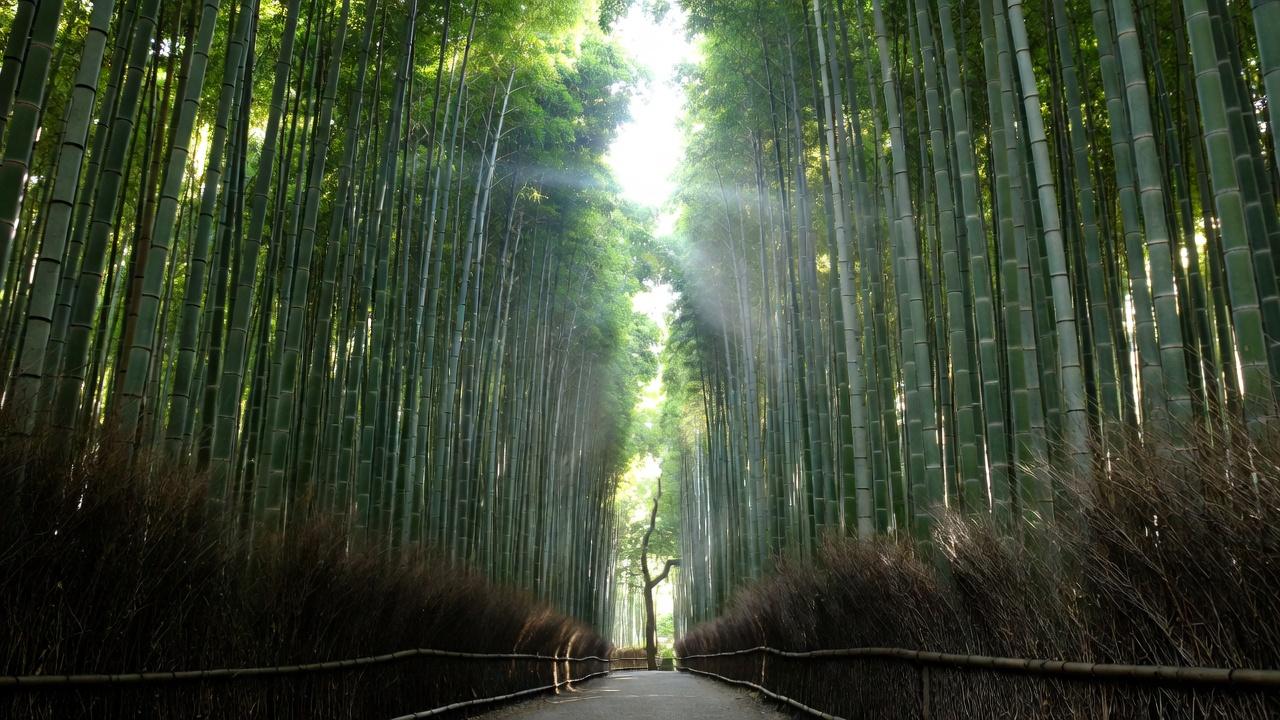
Walk through the towering bamboo stalks in the magical early morning light. The grove is small but otherworldly, especially before crowds arrive.
Arrive by 7 AM for crowd-free photos
Continue north to find quieter bamboo paths
The rustling bamboo sound is part of the magic
Tenryu-ji Temple天龍寺
This UNESCO World Heritage Zen temple features one of Japan's finest landscape gardens, designed by Muso Soseki to borrow the mountain scenery.
The garden exit leads directly to the bamboo grove
Sogenchi Pond reflects the surrounding mountains
Spring and autumn colors are spectacular
Togetsukyo Bridge & River渡月橋
The Moon Crossing Bridge spans the Katsura River with mountain backdrop. Take time for a riverside walk or boat ride.
Good spot for photos with mountain views
Rent boats for a peaceful river experience
Many restaurants and shops along the riverside
Kinkaku-ji (Golden Pavilion)金閣寺
The legendary golden temple, covered in gold leaf and perfectly reflected in its mirror pond. One of Japan's most recognizable sights.
Midday sun creates the best golden reflections
The walking route is one-way, about 30-40 minutes
Don't skip the gardens beyond the pavilion
Ryoan-ji Temple龍安寺
Home to Japan's most famous Zen rock garden. The 15 stones on raked gravel invite contemplation - try to see all 15 at once (it's impossible).
Sit quietly and let the garden reveal itself
The pond garden is also worth exploring
Fewer crowds in late afternoon
Nishiki Market錦市場
End your Kyoto adventure at "Kyoto's Kitchen." This 400-year-old market offers local specialties, street food, and culinary souvenirs.
Most shops close by 6 PM
Try tamagoyaki, pickles, and mochi
Great for edible souvenirs
Meal suggestions
Lunch: Tofu cuisine in Arashiyama or near Tenryu-ji
Dinner: Nishiki Market for food stalls, then dinner downtown
JR San-in Line to Saga-Arashiyama (15 min from Kyoto Station)
Bus 28 connects Arashiyama to Kinkaku-ji area
Consider renting bicycles in Arashiyama
Two-Day Budget Breakdown
A two-day visit means one night of accommodation — the single largest variable in your budget. Guesthouses and hostels near Kyoto Station start around ¥4,000-8,000 per night, while a well-located ryokan in Higashiyama or a boutique hotel near Gion runs ¥12,000-25,000. A traditional kaiseki dinner at a ryokan can be an experience worth the splurge on a weekend trip. Temple entry fees across this itinerary total roughly ¥1,900 (Kiyomizu-dera ¥400, Tenryu-ji ¥800, Kinkaku-ji ¥500, Ryoan-ji ¥500), with Fushimi Inari, the bamboo grove, Gion, and Nishiki Market all free to explore. A Subway & Bus day pass at ¥1,100 covers day two's cross-city travel efficiently, while day one is largely walkable. Budget ¥2,000-4,000 per day for meals — more if you indulge in kaiseki or riverside tofu cuisine in Arashiyama.
Choosing Your Weekend
Two days lets you inhabit a season rather than merely glimpse it. In spring, the cherry blossoms along the Philosopher's Path and around Kiyomizu-dera shift from bud to bloom across a single weekend — and evening illuminations at select temples transform the familiar into something luminous. Autumn brings a similar alchemy: the maples of Tofuku-ji and Eikan-do glow amber and crimson, and nighttime light-ups cast the foliage against dark skies. Summer evenings along the Kamo River offer the charm of noryo-yuka dining platforms over the water. In winter, an overnight dusting of snow on Kinkaku-ji creates perhaps Kyoto's most photographed moment — the golden pavilion mirrored in white. With two days, you have the flexibility to chase these seasonal windows, adjusting your morning start or evening plans to catch a bloom forecast from the Japan Meteorological Agency or a temple illumination schedule.
Frequently Asked Questions
Two days covers the essential highlights well. You'll see Fushimi Inari, Kinkaku-ji, Arashiyama, Gion, and Kiyomizu-dera. For a more relaxed pace or to include day trips to Nara, consider 3-4 days.
The Gion/Kawaramachi area is ideal - central location, walking distance to many sights, good transport links, and authentic atmosphere. Near Kyoto Station is more practical but less charming.
Yes, with early starts and efficient transport. Visit Arashiyama at dawn (bamboo grove opens 24/7), spend the morning there, then head north for Kinkaku-ji and Ryoan-ji in the afternoon.
Practical Information
Budget
~¥7,000
$48/day
Mid-range
~¥14,000
$95/day
Luxury
~¥32,000
$215/day
Per person per day. Includes temple entry fees, meals, and local transport.
A JR Pass is not necessary for this itinerary. Kyoto city buses and the subway are sufficient.
Consider a Kyoto Subway & Bus Day Pass (¥1,100) if you plan to take 5+ rides in a day. An ICOCA card is the most convenient option for all local transport.
Recommended area: Gion / Kawaramachi area
Staying central gives you easy access to buses and trains. Traditional ryokans offer a unique cultural experience but book early in peak seasons.
Ideal for: Spring (Mar-May), Autumn (Sep-Nov)
Best for: Weekend travelers, First-timers, Couples, Photography
Spring (late March to mid-April) and autumn (mid-November to early December) are the most popular times. Visit in shoulder months for fewer crowds.
Where one day in Kyoto feels like opening a book to its most famous pages, two days lets you read between the lines. You begin to notice things that a single day cannot hold — how the light changes between Higashiyama's narrow lanes and Arashiyama's open river valley, how the mood of a temple shifts from morning solitude to afternoon warmth, how Gion reveals itself gradually as the lanterns come on. Two days is enough to feel the city's rhythm rather than merely photograph its landmarks. Yet many travelers find that the second evening brings a quiet reluctance to leave. The northern temples remain unexplored, Nara's deer park beckons as a day trip, and the side streets of Kyoto keep suggesting one more turn. This is why a third day is less an indulgence than a natural extension — a chance to follow the city where it leads rather than where the guidebook points.
Continue exploring
Less time?
1 Day Itinerary
Only have a day trip? Here are the essentials.
More time?
3 Day Itinerary
Add a day for northern Kyoto's golden and silver temples.
Related
Arashiyama Guide
Deep dive into Day 2's bamboo groves and monkey park.
Related
Best Time to Visit
Cherry blossoms, autumn leaves, or summer festivals?
Two days gives you Kyoto's greatest hits — Fushimi Inari, the bamboo grove, Kinkaku-ji. For a deeper exploration that includes tea ceremonies and lesser-known temples, extend to 3 days or 4 days.