
Hours
24/7
Always open
Best Time
Dawn
5–7 AM
Entry Fee
Free
Always
Why Visit at Dawn
Fushimi Inari receives over 3 million visitors annually. By mid-morning, the famous gate corridors are packed with tourists, making photography and contemplation nearly impossible.
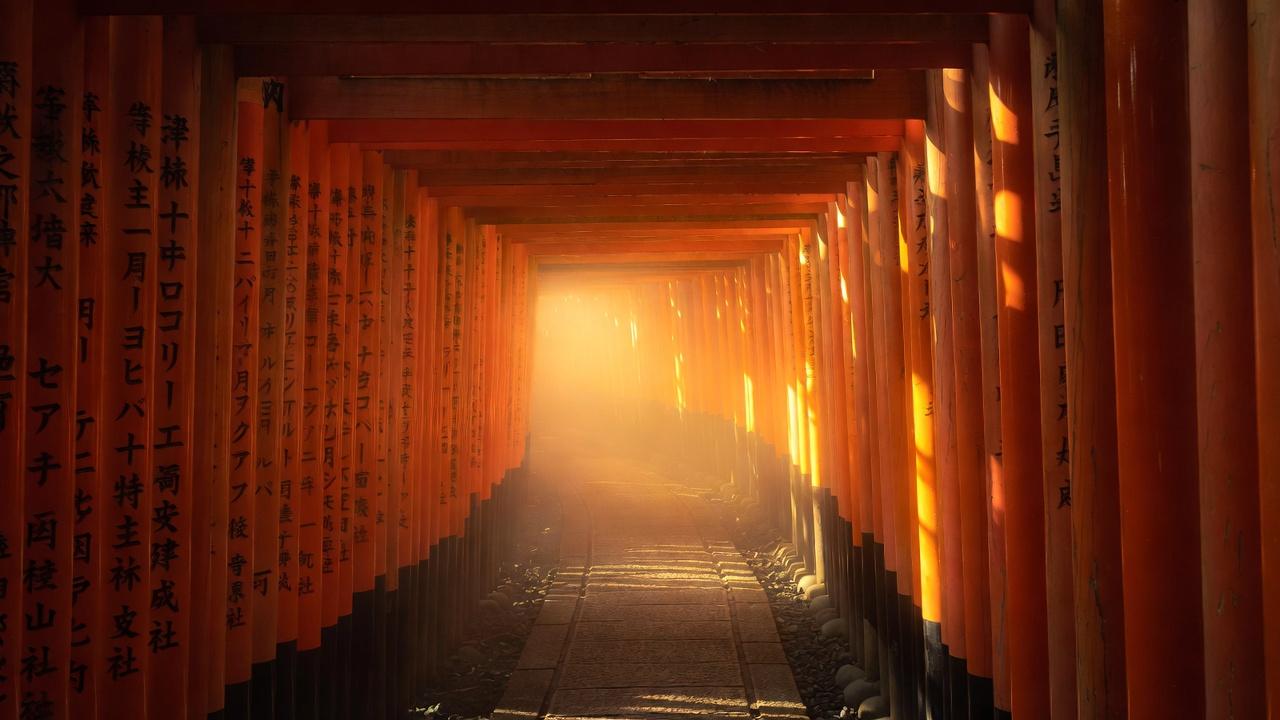
Arrive at dawn (5–6 AM) and you'll have the gates almost entirely to yourself. The soft morning light filtering through the vermilion gates creates a magical atmosphere that's simply not possible later in the day. Most visitors turn back at the first viewpoint. Keep going — the gates thin out dramatically after 30 minutes and you'll have the mountain to yourself.
Bring a flashlight if arriving before sunrise. The upper paths can be dark, and the forest canopy blocks early light.
Choose Your Route
Quick Visit
Walk through the most photographed section of gates to the first viewpoint.
Half Hike
Continue to Yotsutsuji intersection for panoramic Kyoto views.
Full Summit
Complete the full loop to the summit at 233m elevation.
Visiting Tips
Photography
Best light at dawn golden hour or on overcast days. Wide-angle lens captures the gate tunnels best. Include a human figure for scale. The backs of the gates show donor names — also photogenic.
What to know
Dedicated to Inari, the Shinto deity of rice and prosperity. Fox statues are Inari's messengers — look for them everywhere. The gates are donated by businesses for good fortune. The official Fushimi Inari Taisha website has maps and ceremony schedules. The shrine is open 24/7 but the office closes at 5 PM.
Practical
Wear comfortable shoes — the summit hike involves stairs. Bring water — limited vendors on upper trails. Restrooms available at several points. Combine with nearby Tofuku-ji temple, especially in autumn. Afterward, head north to the Gion district for an evening of lantern-lit streets.
Getting There
From Kyoto Station
Take the JR Nara Line from Kyoto Station to Inari Station — just 5 minutes and ¥150. The shrine entrance is directly across from the station exit.
Covered by JR Pass. The Keihan Line also stops nearby at Fushimi-Inari Station.
Frequently Asked Questions
Dawn (5–6 AM) is magical — you'll have the gates almost entirely to yourself. The soft morning light filtering through the vermilion gates creates an atmosphere that's impossible later in the day. The shrine is open 24/7, so early visits are always possible.
The full loop to the summit and back takes 2–3 hours at a steady pace. Most visitors only walk the first 20 minutes to the Senbon Torii area. The higher you go, the fewer people you'll encounter, and the more atmospheric the experience becomes.
Yes, completely free and open 24 hours a day, 365 days a year. The shrine office closes at 5 PM, but the trails and torii gates are always accessible. This makes dawn and evening visits possible year-round.
The foxes (kitsune) are messengers of Inari, the Shinto deity of rice, prosperity, and business. You'll see them throughout the shrine holding symbolic items: a key (to granaries), a jewel (to spirits), a sheaf of rice, or a scroll. Visitors can buy small fox-shaped ema (votive tablets) to write wishes on.
Continue exploring
Fushimi Inari pairs well with southern Kyoto's sake district and Tofuku-ji. For a full day built around the shrine, see our 1-day itinerary — most routes start or end here.