

One day in Kyoto is a distillation — not a compromise. Some of the most affecting encounters with this city happen precisely because time is finite, because each temple gate and stone-paved lane carries the weight of being the only one you'll see today.
This itinerary is designed for travelers arriving from Osaka on an early train, cruise passengers docking at Maizuru or Kobe with a window of daylight, or anyone passing through the Kansai region who can spare twelve hours for something extraordinary. You don't need a hotel. You don't need luggage. You need comfortable shoes and a willingness to be still for a moment when the light catches the gold leaf of Kinkaku-ji across its pond.
The route moves from the vermilion corridors of Fushimi Inari — where the mountain itself becomes a shrine — through Kyoto's northwest to Kinkaku-ji, and closes in the wooden intimacy of Gion, where geiko still walk to evening appointments along Hanamikoji Street. Each stop exists in a different century, a different mood, a different quality of silence.
What makes a single day here work is Kyoto's compactness. The city's bus network connects these landmarks efficiently, and the distances between them leave space for the small discoveries — a moss-covered wall, a wagashi sweet in a tea house, the particular blue of a Kyoto twilight — that no itinerary can predict.
Before You Board the Train
- ●Coin lockers at Kyoto Station (¥400–¥700) hold bags up to suitcase size. The largest lockers are on the Hachijo side, near the shinkansen gates.
- ●Last shinkansen to Tokyo departs at 21:20. Last JR Special Rapid to Osaka leaves around 23:30.
- ●Buy your Subway & Bus Day Pass (¥1,100) at the station's Bus Ticket Center before heading out.
Seasonal Timing for a Day Trip
Spring transforms a one-day visit into something almost unbearably beautiful — cherry blossoms frame every temple approach — but it also brings peak crowds. Arrive before 7 AM at Fushimi Inari or you'll share the torii gates with tour groups shoulder to shoulder. Autumn foliage turns Kiyomizu-dera's hillside into a slow fire of amber and crimson, though November weekends are similarly congested. Summer demands an early start and a slower pace; the heat and humidity can be punishing by midday, so build in shade breaks and carry water. Winter, often overlooked, may be the finest season for a single day. The crowds thin to almost nothing, the air is crystalline, and if snow dusts Kinkaku-ji's gold roof — a rare but real possibility — you'll witness one of Japan's most celebrated views. Check the Japan Meteorological Agency for winter forecasts.
Day 1
Kyoto Highlights Speed Run
Multiple Districts— Essential Kyoto Experience
An optimized route hitting Kyoto's top 3 must-see attractions with strategic timing to avoid crowds and maximize your limited time.
Kyoto was Japan's imperial capital for over a thousand years, and today's route threads through three of its most resonant layers. You begin in the south at Fushimi Inari, where thousands of vermilion gates climb a forested mountainside — a shrine to the rice god that has stood since 711 CE. From there you cross the city to its northwest corner, where Kinkaku-ji floats on its mirror pond like a meditation on impermanence — rebuilt from ashes in 1955, yet somehow more luminous for it. The day closes in Gion, Kyoto's most famous geisha district, where wooden machiya townhouses line stone-paved lanes and the rustle of silk still announces a geiko's evening passage. These three districts — sacred mountain, gilded reflection, living tradition — form a kind of shorthand for the city itself.
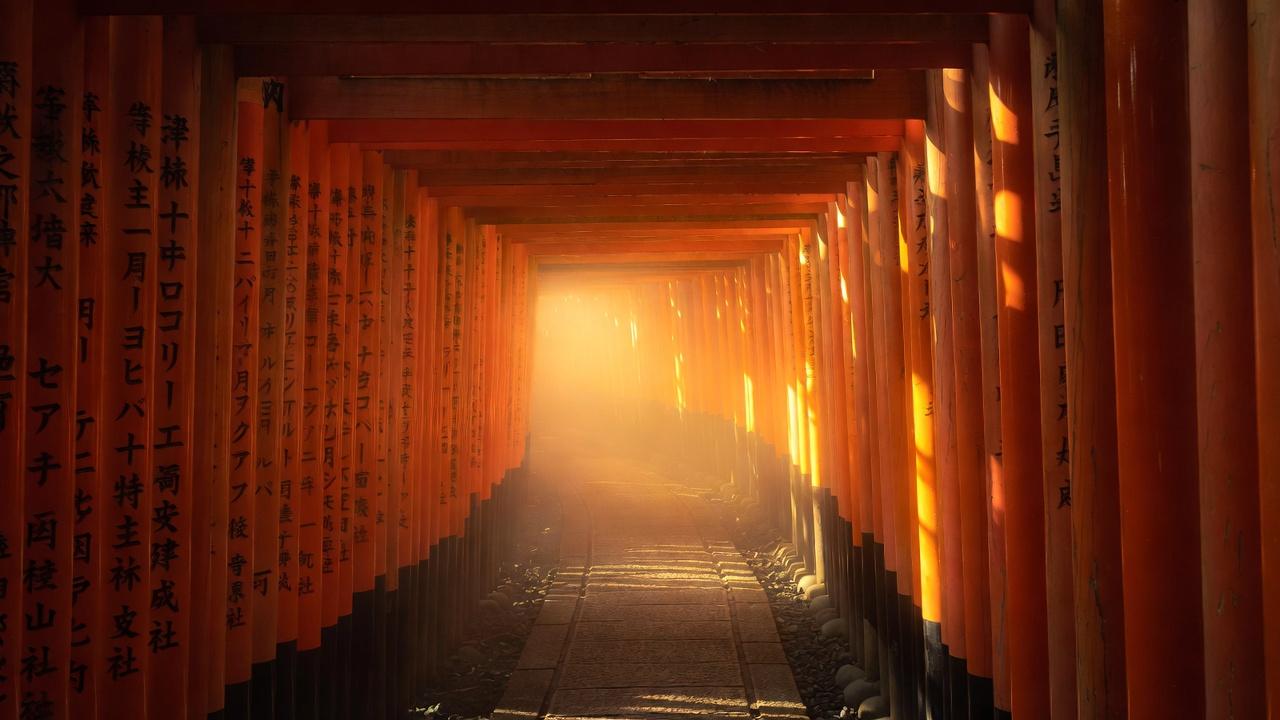
Fushimi Inari Taisha伏見稲荷大社
Start your day at Japan's most-visited shrine. The thousands of vermilion torii gates create striking photos, especially in the quiet morning hours.
Arrive early to beat the crowds - this is crucial
Hike to the first main viewpoint (Yotsutsuji intersection) for the best experience
Full mountain hike takes 2-3 hours, but 30-45 minutes gives the best photo ops
Kinkaku-ji (Golden Pavilion)金閣寺
The gold-leafed pavilion is a must-see, even on a short visit. Its gold-leaf covered structure reflected in the mirror pond stays with you.
The walk-through route is fixed and takes about 30-40 minutes
Best photos from the viewing area immediately after entry
Clear days offer the best reflections
Lunch Break
Grab lunch near Kinkaku-ji or in transit to your next destination. Try local ramen or a quick udon for an authentic taste of Kyoto.
Ramen shops near Kinkaku-ji bus stop are quick and good
Avoid tourist trap restaurants with picture menus outside
Gion District祇園
Kyoto's famous geisha district features traditional wooden machiya houses, stone-paved streets, and the atmospheric Hanamikoji Street.
Walk down Hanamikoji Street, the main geisha promenade
Visit Yasaka Shrine at the eastern end
Best chance to see geiko/maiko is around 5-6 PM, but afternoon gives more time
Kiyomizu-dera Temple清水寺
If time allows, add this UNESCO World Heritage temple with its famous wooden stage. The walk through Ninenzaka and Sannenzaka streets is equally memorable.
This is optional if time is tight - prioritize Gion if needed
The approach streets are as memorable as the temple
Beautiful at sunset if you can time it
Meal suggestions
Breakfast: Eat before arriving or quick bite at Kyoto Station
Lunch: Ramen near Kinkaku-ji or onigiri on the go
Dinner: If time permits, dinner in Gion before departing
Start at Kyoto Station - accessible by shinkansen from Tokyo (2h15m) or train from Osaka (15-30 min)
Take JR Nara Line to Inari Station (5 min)
Use Bus 205 for Kinkaku-ji
Return via bus to Gion area
What a Day Trip Actually Costs
A one-day visit to Kyoto is remarkably gentle on the wallet, partly because you skip the costliest element of any trip: accommodation. Temple entry fees are modest — typically ¥400 to ¥600 per site, with Fushimi Inari entirely free. A Kyoto City Subway & Bus day pass costs ¥1,100 and covers every route you'll need. Lunch at a neighborhood ramen shop or udon counter runs ¥800 to ¥1,500, and a matcha and wagashi set at a tea house adds another ¥600 to ¥1,000. Budget travelers can move through the day on ¥3,000 to ¥4,000 total. Those wanting a sit-down kaiseki lunch or a taxi between stops will spend closer to ¥8,000. Either way, the ratio of cost to wonder is extraordinarily favorable — Kyoto's greatest treasures charge little or nothing to enter.
Practical Information
Budget
~¥5,000
$35/day
Mid-range
~¥10,000
$70/day
Luxury
~¥25,000
$170/day
Per person per day. Includes temple entry fees, meals, and local transport.
A JR Pass is recommended for this itinerary, especially if arriving from Tokyo or combining with other cities.
Consider a Kyoto Subway & Bus Day Pass (¥1,100) if you plan to take 5+ rides in a day. An ICOCA card is the most convenient option for all local transport.
Recommended area: Day trip from Osaka or Tokyo
Staying central gives you easy access to buses and trains. Traditional ryokans offer a unique cultural experience but book early in peak seasons.
Ideal for: Spring (Mar-May), Autumn (Sep-Nov)
Best for: Day trippers, First-timers, Time-limited travelers
Spring (late March to mid-April) and autumn (mid-November to early December) are the most popular times. Visit in shoulder months for fewer crowds.
Frequently Asked Questions
One day allows you to see the top highlights (Fushimi Inari, Kinkaku-ji, Gion), but you'll miss a lot. If possible, consider 2-3 days for a more relaxed experience. One day works best as a day trip from Osaka.
Aim to arrive by 7 AM at Kyoto Station. This allows you to reach Fushimi Inari by 7:30 AM before the crowds arrive. From Osaka, the first trains leave around 5:30-6 AM.
If you're coming from Tokyo, yes - the JR Pass covers the shinkansen. From Osaka, a regular ticket is fine. Within Kyoto, use a Subway & Bus Day Pass (¥1,100) or ICOCA card.
One day yields more than a checklist of famous sites. It leaves you with a specific quality of attention — the vermilion persistence of thousands of gates, the way gold leaf holds light differently than anything else in the world, the sound of wooden geta on stone in Gion at dusk. These impressions are vivid precisely because they're compressed, each one given the weight of scarcity. Most visitors who spend a single day in Kyoto begin planning their return before they've even boarded the evening train. The city reveals just enough of itself to make clear how much remains hidden — the moss temple you didn't reach, the bamboo grove you only glimpsed from a bus window, the tea ceremony you'll save for next time. One day is a beginning. It was always meant to be.
Continue exploring
More time?
2 Day Itinerary
Stay overnight and explore Arashiyama on day two.
More time?
3 Day Itinerary
The ideal first visit — temples, bamboo groves, and Zen gardens.
Related
Fushimi Inari Guide
Dawn hiking routes and torii gate photography tips.
Related
Osaka to Kyoto
Four train routes compared — from ¥410 to 15 minutes.
One day barely scratches the surface, but it's enough to fall in love. If you can spare more time, our 2-day and 3-day itineraries add Arashiyama and the northern temples.