

Three days is the rhythm Kyoto was made for. Not the breathless sprint of a single day, nor the leisurely drift of a week — but something in between, a duration that lets you move slowly enough to notice the details without losing the thread of the city's story.
This itinerary is built for first-timers who want more than a checklist. It suits cultural travelers who linger in temple gardens, photographers who wait for the right light, and anyone who believes a city reveals itself in layers rather than landmarks. Three days gives you time to sit with a bowl of matcha in a quiet teahouse, to watch the way morning mist lifts from a moss garden, to return to a street at dusk and find it transformed.
The progression is geographical and intentional. Day one traces the eastern temple corridor — Fushimi Inari's mountain of vermilion gates, the preserved merchant streets of Higashiyama, the lantern-lit canals of Gion. Day two moves west to Arashiyama, where bamboo groves and Zen gardens meet the forested edge of the city. Day three arcs through the north — the golden pavilion, the philosopher's canal path — before descending to the market stalls and covered arcades of downtown Kyoto. Each day feels like a different city, and together they compose something close to a complete portrait.
Three days is the duration most seasoned Japan travelers recommend for a first visit to Kyoto. One day is a highlight reel. Two days adds depth. But three days is where the city stops being a series of famous sites and starts becoming a place you understand — the way the light changes between Higashiyama and Arashiyama, the rhythm of temple opening hours, the particular quiet of a garden at closing time.
We've walked this route in every season — autumn mornings at Tofuku-ji are worth setting an alarm for.
Why Three Days Is the Sweet Spot
Kyoto's geography works in your favour. The city's major sights cluster into three natural corridors: the eastern temple hills of Higashiyama, the western bamboo groves and riverside temples of Arashiyama, and the northern golden pavilions and philosopher's canals of Kita-ku. One corridor per day eliminates backtracking, and each area has its own character — you'll feel like you're visiting three different cities within the same ancient capital.
This itinerary is built around early mornings and late afternoons — the hours when Kyoto's most famous sites are at their quietest and most beautiful. Fushimi Inari at 6 AM is a different shrine than at noon. The bamboo grove at 7 AM belongs to you alone. By structuring each day around these golden hours, you'll experience a version of Kyoto that most visitors — arriving on tour buses at 10 AM — never see.
The pace is intentionally moderate. We've built in time for unplanned discoveries: a tea house you stumble into on a side street, a temple garden that holds you longer than expected, a conversation with a shopkeeper wrapping wagashi in bamboo leaf. These moments can't be scheduled, but they can be made room for — and they're often what you remember most.
Before You Start: Practical Essentials
Where to stay: Base yourself in the Gion or Kawaramachi area for the best balance of atmosphere and convenience. You'll be within walking distance of Day 1's Higashiyama sights, and buses to Arashiyama and Kinkaku-ji leave from nearby stops. A mid-range hotel here runs ¥10,000–18,000 per night; traditional guesthouses start at ¥5,000.
Getting around: Buy a Kyoto Subway & Bus One Day Pass (¥1,100) for Day 3, when you'll need multiple bus rides between northern temples and downtown. Days 1 and 2 are more walkable, though the JR Nara Line to Fushimi Inari (¥150) and JR Sagano Line to Arashiyama (¥240) are essential. An ICOCA card handles everything.
What to bring each day: Comfortable walking shoes are non-negotiable — expect 15,000–20,000 steps daily across temple stone paths and hilly streets. Pack a small towel (restrooms rarely have paper towels), a water bottle (Japan's tap water is excellent), and cash (many temples and small restaurants don't accept cards).
Day 1
Eastern Kyoto: Fushimi Inari & Higashiyama
Fushimi & Higashiyama— Landmark Shrines & Traditional Streets
Start your Kyoto journey with the most recognizable sight - the thousand vermilion torii gates of Fushimi Inari. Then explore the preserved streets of Higashiyama, visiting temples and ending in the atmospheric Gion district.
The eastern hills of Kyoto — Higashiyama — are where the city keeps its oldest memories. This is the temple corridor, a continuous thread of sacred architecture that has drawn pilgrims since the Heian period. You begin in the south at Fushimi Inari, where thousands of vermilion gates climb through cedar forest in a tunnel of light and shadow. Then north along the foothills: Tofuku-ji's austere Zen gardens, Kiyomizu-dera's wooden stage cantilevered over a valley, the preserved merchant streets of Ninenzaka where every flagstone has been worn smooth by centuries of wooden sandals. The day ends in Gion at dusk, when paper lanterns glow along the Shirakawa canal and the district's wooden facades take on the warmth of another century. This is Kyoto at its most layered — each turn reveals another era, another tradition still breathing.
Fushimi Inari Taisha伏見稲荷大社
Arrive at dawn to experience the vermilion torii gates without crowds. The main shrine is free to enter 24 hours, and the hiking trail through thousands of gates up Mount Inari takes 2-3 hours round trip.
Arrive by 6 AM to have the gates nearly to yourself for photos
The full hike to the summit takes 2-3 hours, but the first 30 minutes offer the best photo spots
Bring water - there are few vending machines on the upper trail
Watch for the small fox statues - Inari is the god of rice and foxes are the messengers
Tofuku-ji Temple東福寺
One of Kyoto's largest Zen temples, famous for its celebrated autumn foliage and the Tsutenkyo Bridge. The temple grounds offer beautiful Zen gardens and peaceful walks.
The Tsutenkyo Bridge offers the most photogenic views
In autumn (November), this is one of the most crowded spots in Kyoto
The Zen gardens are a peaceful retreat year-round
Kiyomizu-dera Temple清水寺
This UNESCO World Heritage site features a famous wooden stage that juts out from the main hall, offering sweeping views over Kyoto. The temple dates to 778 AD.
Walk up through Ninenzaka and Sannenzaka streets for the full experience
The Otowa Waterfall at the base has three streams for different blessings
Return at night during special illumination events in spring and autumn
Ninenzaka & Sannenzaka Streets二年坂・三年坂
These preserved historic streets are lined with traditional wooden buildings housing tea shops, souvenir stores, and local crafts. Perfect for a leisurely stroll.
Legend says if you fall on these streets, you'll have bad luck - watch your step!
Stop at a traditional tea house for matcha and wagashi (Japanese sweets)
Look for the Starbucks in a traditional machiya house
Yasaka Pagoda (Hokan-ji)八坂の塔
This five-story pagoda is a fifteenth-century pagoda and one of Kyoto's most photographed landmarks. The original temple on this site dates to the sixth century, but the current structure was rebuilt in 1440.
The best photo spot is from the street below looking up
You can enter the pagoda for ¥400 to see the interior
Beautiful when lit up at night
Gion District祇園
Kyoto's famous geisha district with traditional wooden machiya houses, exclusive tea houses, and the chance to spot geiko and maiko in the early evening.
Best chance to see geiko/maiko is around 5-6 PM on Hanamikoji Street
Be respectful - don't chase or block geisha for photos
Explore the smaller side streets for a quieter experience
Visit Yasaka Shrine at the end of the district
Meal suggestions
Breakfast: Grab onigiri from a convenience store for an early start
Lunch: Try yudofu (tofu hot pot) near Nanzen-ji Temple
Dinner: Kaiseki or casual izakaya in Gion
Take the JR Nara Line to Inari Station (5 min from Kyoto Station)
From Fushimi Inari, take the Keihan Line to Gion-Shijo for Higashiyama
The Higashiyama district is best explored on foot
Day 2
Northwestern Kyoto: Arashiyama
Arashiyama— Bamboo, Nature & Zen Gardens
Spend the day in the atmospheric Arashiyama district, famous for its ethereal bamboo grove, scenic river, and some of Kyoto's finest Zen temples and gardens.
Arashiyama has been Kyoto's western retreat since the Heian aristocracy built their villas along the Katsura River a thousand years ago. The district sits where the city dissolves into forested mountains, and it still carries that sense of threshold — between the cultivated and the wild, the human and the natural. The bamboo grove, with its towering stalks filtering light into green-gold columns, is a landscape that exists nowhere else at this scale. Tenryu-ji's borrowed-scenery garden folds the surrounding peaks into its composition, a technique perfected here in the fourteenth century. Even the bridge — Togetsukyo, the Moon Crossing — speaks to the contemplative spirit of the place. By afternoon, when the tourist crowds thin and the river reflects the mountain silhouettes, you begin to understand why emperors came here to think.
Arashiyama Bamboo Grove嵐山竹林
Walk through the otherworldly path lined with towering bamboo stalks. The rustling sound of bamboo in the wind is designated as one of Japan's 100 Soundscapes.
Arrive by 7 AM for photos without crowds - this is essential
The grove is small but the atmosphere is magical in early light
Continue north to find less-crowded bamboo paths
The sound of wind through bamboo is part of the experience
Tenryu-ji Temple天龍寺
A UNESCO World Heritage site and the most important temple in Arashiyama. The Zen garden designed by Muso Soseki features a pond that mirrors the surrounding hills.
Enter through the north gate for direct access to the bamboo grove
The garden is beautiful in every season
Consider the additional fee to see the temple buildings
Okochi-Sanso Villa大河内山荘
A manicured hillside garden estate built by silent film actor Okochi Denjiro. The manicured gardens offer panoramic views of Kyoto and include matcha tea service.
Admission includes matcha tea and a sweet - worth the price
One of the best-kept secrets in Arashiyama
Beautiful views of the mountains and city below
Togetsukyo Bridge渡月橋
The "Moon Crossing Bridge" spans the Katsura River. The surrounding area offers boat rides, riverside walks, and beautiful mountain scenery.
Walk across for views of the forested mountains
Rent a rowboat to experience the river
The view is especially beautiful during cherry blossom season
Iwatayama Monkey Park嵐山モンキーパーク
Hike up for 20 minutes to find over 100 wild Japanese macaques. You can feed them from inside a cage structure while enjoying panoramic views of Kyoto.
The 20-minute uphill hike is moderate but worth it
Don't look the monkeys directly in the eyes
The view of Kyoto from the top is spectacular
Buy peanuts at the top to feed the monkeys
Gio-ji Temple祇王寺
A small but enchanting temple with a moss garden that glows emerald green. Associated with a tragic love story from the Tale of Heike.
The moss is most lush after rain
Small but incredibly peaceful
Combine with nearby Adashino Nenbutsu-ji
Arashiyama Riverside Walk嵐山散策
End the day with a leisurely walk along the Katsura River as the sun sets behind the mountains. Watch for cormorant fishing boats in summer.
Beautiful sunset views over the mountains
Many restaurants along the river for dinner
The area quiets down significantly after 5 PM
Meal suggestions
Breakfast: Traditional Japanese breakfast at your hotel
Lunch: Tofu dishes at Sagano area restaurants
Dinner: Unagi (eel) at a riverside restaurant
Take the JR San-in Line from Kyoto Station to Saga-Arashiyama (15 min)
Or take the scenic Randen tram from Shijo-Omiya
Rent a bicycle to cover more ground - the area is very bike-friendly
Day 3
Northern Kyoto: Golden Temple & Zen
Kita-ku & Central Kyoto— Landmark Temples & Imperial History
Visit the legendary golden and silver pavilions, explore the massive Zen rock garden at Ryoan-ji, and end with Nishiki Market and downtown Kyoto.
Northern Kyoto is where the city's spiritual ambitions reach their grandest expression. Kinkaku-ji, sheathed in gold leaf and floating above its mirror pond, was built by a shogun who wanted to manifest paradise on earth. A short walk away, Ryoan-ji's rock garden offers the opposite — fifteen stones on raked gravel, an exercise in radical subtraction that has puzzled visitors for five centuries. The afternoon arc from Ginkaku-ji down the Philosopher's Path traces the canal where Nishida Kitaro walked each morning, turning Zen Buddhism into modern philosophy. The day closes at Nishiki Market, where four centuries of Kyoto's culinary tradition line a single narrow arcade — pickled vegetables, fresh tofu, roasted tea. This final day moves from the monumental to the intimate, from gold pavilions to a shopkeeper wrapping wagashi in bamboo leaf.
Kinkaku-ji (Golden Pavilion)金閣寺
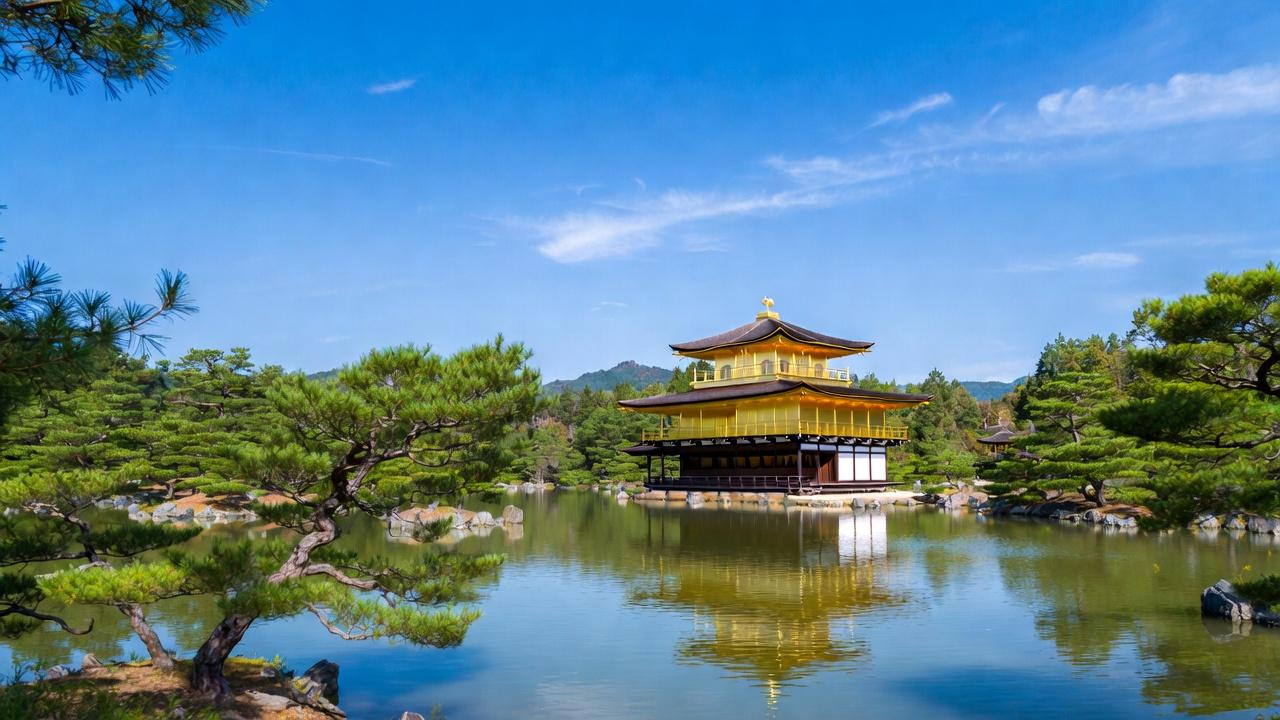
The famous golden pavilion covered in gold leaf, reflected perfectly in the surrounding pond. One of Japan's most recognizable images and a UNESCO World Heritage site.
Arrive right at 9 AM opening for fewer crowds
The best photo spot is immediately after entering
Visit on a clear day for the best reflections
Don't miss the tea garden and exit garden areas
Ryoan-ji Temple龍安寺
Home to Japan's most famous Zen rock garden. The 15 stones arranged on raked gravel are said to be impossible to see all at once from any angle.
Sit and contemplate - the garden reveals itself over time
The surrounding pond garden is also beautiful
Early morning offers more peaceful contemplation
Ninna-ji Temple仁和寺
A large temple complex known for its late-blooming cherry trees and beautiful palace buildings. The five-story pagoda is a prominent landmark.
Famous for Omuro cherry trees that bloom late in mid-April
Less crowded than other famous temples
The palace grounds are excellent for photography
Ginkaku-ji (Silver Pavilion)銀閣寺
Despite its name, the Silver Pavilion was never covered in silver. Instead, it exemplifies wabi-sabi aesthetics with its moss garden and sand patterns.
The moss garden is more impressive than the pavilion itself
The sand cone represents Mount Fuji
Walk up the hill path for views over Kyoto
Philosopher's Path哲学の道
A 2km canal-side path named after philosopher Nishida Kitaro who walked it daily for meditation. Lined with cherry trees and small temples.
Peak cherry blossom spot in spring
Many small temples and cafes along the way
Connects Ginkaku-ji to Nanzen-ji temple
Nishiki Market錦市場
Known as "Kyoto's Kitchen," this 400-year-old market stretches five blocks with over 100 vendors selling everything from pickles to fresh fish to sweets.
Try tamagoyaki (Japanese omelet), tsukemono (pickles), and mochi
Most shops close by 6 PM, so don't arrive too late
The market is narrow - be patient during busy times
End with a meal in the Pontocho alley nearby
Meal suggestions
Breakfast: Hotel breakfast or cafe near Kyoto Station
Lunch: Ramen or udon in the Philosopher's Path area
Dinner: Explore Nishiki Market for street food and local delicacies
Take bus 205 from Kyoto Station to Kinkaku-ji
Bus 59 connects Kinkaku-ji to Ryoan-ji (10 min)
Return downtown via bus or taxi from Ginkaku-ji area
How to Customize This Itinerary
This route is a framework, not a rigid schedule. Swap temples based on your interests: if Zen gardens move you more than golden pavilions, trade Kinkaku-ji for the quieter Daitoku-ji complex on Day 3. If food is your priority, extend the Nishiki Market visit into a proper food crawl — our Kyoto food guide maps the best stalls and restaurants by price.
With kids: Add Arashiyama's Monkey Park (Day 2) and the Kyoto Railway Museum near Kyoto Station. Skip the longer temple walks and build in more Nishiki Market snack time. For couples: Prioritise the evening walks through Gion (Day 1) and consider a riverside kawayuka dinner in Pontocho. On a budget: Many of this itinerary's best moments are free — Fushimi Inari, the bamboo grove, the Philosopher's Path, and Gion at dusk cost nothing. Check our budget guide for daily cost breakdowns.
Have a fourth day? Add a day trip to Nara (45 min by train) for free-roaming deer and the colossal Buddha at Todai-ji, or visit Uji (20 min) for Japan's finest matcha and the temple on the ¥10 coin. Our 4-day itinerary maps both options.
Best Seasons for Three Days
Three days is long enough to catch a season in motion. In spring, you might see the first cherry blossoms unfurl along the Philosopher's Path on day one and find them in full bloom by day three. Autumn works similarly — the maples at Tofuku-ji may be just turning when you arrive and burning crimson by the time you reach Arashiyama. Evening illumination events at Kiyomizu-dera and other temples run during peak seasons, and a three-day stay gives you the flexibility to attend without rearranging your entire schedule. Summer brings long daylight hours and fewer crowds at the major temples, while winter offers the rare possibility of snow on the golden pavilion — an image that appears on postcards but requires patience and luck to witness in person.
Practical Information
Budget
~¥8,000
$55/day
Mid-range
~¥15,000
$100/day
Luxury
~¥35,000
$235/day
Per person per day. Includes temple entry fees, meals, and local transport.
A JR Pass is not necessary for this itinerary. Kyoto city buses and the subway are sufficient.
Consider a Kyoto Subway & Bus Day Pass (¥1,100) if you plan to take 5+ rides in a day. An ICOCA card is the most convenient option for all local transport.
Recommended area: Gion / Kawaramachi area
Staying central gives you easy access to buses and trains. Traditional ryokans offer a unique cultural experience but book early in peak seasons.
Ideal for: Spring (Mar-May), Autumn (Sep-Nov)
Best for: First-time visitors, Culture lovers, Photography, Couples
Spring (late March to mid-April) and autumn (mid-November to early December) are the most popular times. Visit in shoulder months for fewer crowds.
Frequently Asked Questions
Three days is ideal for first-time visitors to see the major highlights. You'll cover the major sites like Fushimi Inari, Kinkaku-ji, Arashiyama, and Gion while still having time to enjoy the atmosphere. If you want to include day trips to Nara or explore deeper, consider 4-5 days.
The Gion/Kawaramachi area is the best base. It's central, walkable to many attractions, has excellent transport links, and offers the most authentic Kyoto atmosphere. The area near Kyoto Station is more convenient for arrivals but less atmospheric.
A JR Pass is not cost-effective for just Kyoto. The city is best explored by bus and walking. Consider a Kyoto Subway & Bus Day Pass (¥1,100) or ICOCA card instead. Only get a JR Pass if you're also traveling to Tokyo, Osaka, or other cities.
Spring (late March to early April) for cherry blossoms and autumn (November) for fall foliage are the most beautiful but crowded times. For fewer crowds with pleasant weather, try May, early June, or October.
Yes! Early morning visits (before 8 AM) transform the experience at major sites like Fushimi Inari and the Arashiyama Bamboo Grove. You'll have peaceful moments for photos and contemplation that are impossible later in the day.
Budget travelers can spend around ¥8,000-10,000 per day including accommodation, temple fees, transport, and food. Mid-range travelers typically spend ¥15,000-20,000, while luxury travelers can spend ¥35,000+ per day.
What Three Days Costs
Two nights of accommodation anchor your three-day budget. A well-located guesthouse near Gion or Kawaramachi runs ¥5,000-8,000 per night; a mid-range hotel with breakfast, ¥12,000-18,000. Temple entry fees accumulate steadily — this itinerary includes roughly ten paid sites at ¥300-1,000 each, totaling ¥3,000-5,000 over three days. A Kyoto Subway & Bus Day Pass at ¥1,100 pays for itself on any day you take four or more rides, though days one and two reward walking more than riding. Meals range from ¥800 convenience store breakfasts and ¥1,200 ramen lunches to ¥5,000+ kaiseki dinners in Gion. The most memorable experiences — dawn at Fushimi Inari, the bamboo grove in first light, the Philosopher's Path in late afternoon — cost nothing at all.
Three days gives you the essential Kyoto — the vermilion gates, the golden pavilion, the bamboo grove, the geisha district, the rock garden, the market arcade — but more importantly, it gives you the silences between them. The ten-minute walk along a canal where no one else is walking. The second cup of tea in a garden you weren't planning to visit. The moment when a temple bell sounds across the city at dusk and you realize you've stopped hurrying. This is not the complete Kyoto. The tea ceremony district of Uji, the mountain monastery of Kurama, the thousand torii of Fushimi's upper trails — these wait for another visit. And that is perhaps the finest thing three days offers: not just a journey through Japan's most beautiful city, but a reason to return.
Continue exploring
Three days is the sweet spot for most visitors. Combining with Osaka or Nara? Our Kansai circuit guide maps the full loop with suggested day splits.