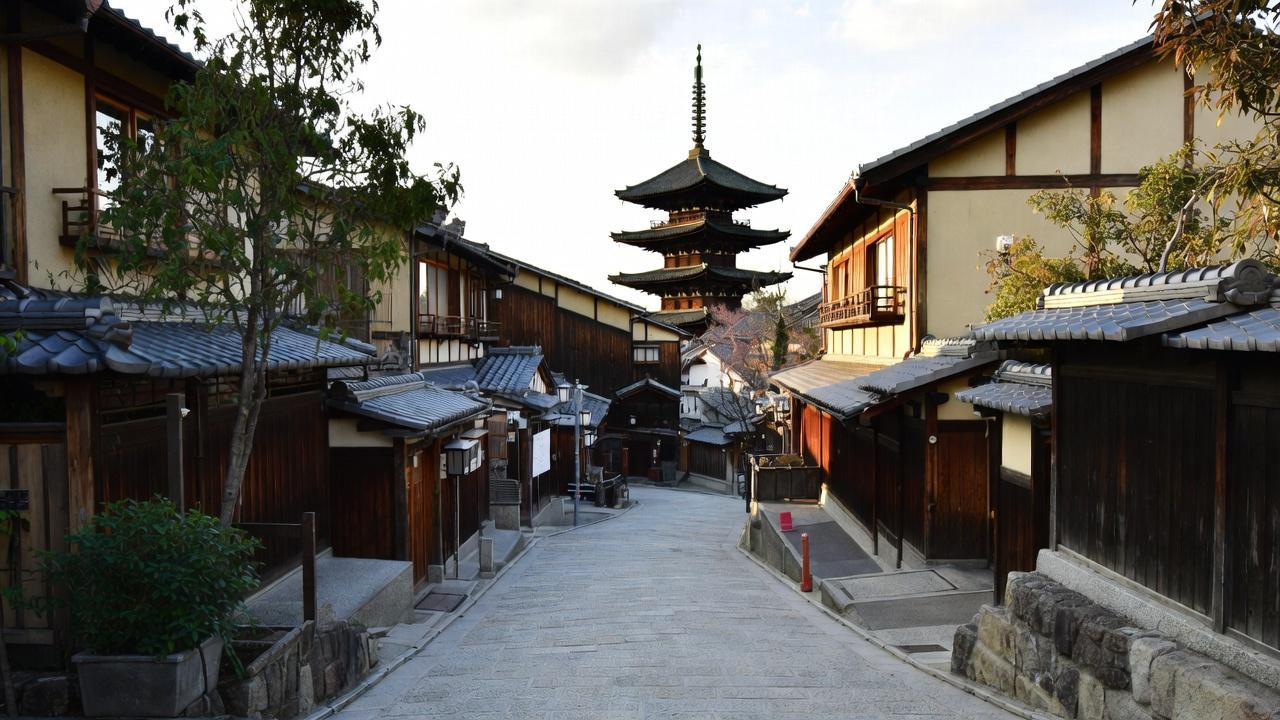


Five days in Kyoto is not a longer vacation — it is a different kind of experience entirely. The first two days belong to the famous names: Fushimi Inari's vermilion tunnels, Kinkaku-ji's golden reflection, the bamboo grove at Arashiyama. These are extraordinary places, and they deserve your full attention rather than the hurried thirty-minute visits that shorter itineraries demand. But on the third morning, something shifts. You begin noticing the spaces between the landmarks — the unmarked temple gate half-hidden by persimmon trees, the sound of a shamisen drifting from an upstairs window in Gion, the particular quality of light that falls through cedar canopy onto moss.
This itinerary is designed for travelers who have either visited Kyoto before and want to move beyond the surface, or who instinctively understand that a city with seventeen UNESCO World Heritage Sites and over two thousand temples cannot be meaningfully experienced in a weekend. It suits cultural deep-divers, photography enthusiasts who want to wait for the right light rather than snap and move on, and slow travelers who believe the journey includes sitting with a bowl of matcha while rain falls on a stone garden.
The fifth day takes you into neighborhoods most visitors never reach: Daitoku-ji's labyrinth of Zen sub-temples, the Nishijin district where textile artisans still weave on wooden looms, and the tea ceremony quarters where Japan's most refined cultural practice continues in quiet rooms overlooking private gardens. These are not secondary attractions — they are the heart of the city, accessible only to those who give Kyoto the time it asks for.
Day 1
Eastern Kyoto: Fushimi Inari & Higashiyama
Fushimi & Higashiyama— First Impressions
Start with Kyoto's most recognizable sight, then immerse yourself in the atmospheric streets and temples of the Higashiyama district.
Higashiyama — the eastern hills — is where Kyoto first reveals its layered identity. Long before the tourist buses arrive, these slopes belonged to pilgrims and poets. The district grew organically around Kiyomizu-dera's wooden stage and the merchant streets that fed its visitors for centuries. Walking here in the early hours, you sense the old capital's rhythm: stone paths worn smooth by wooden geta, the scent of incense drifting from doorways, cedar forests pressing close against temple walls. This is not a curated museum district — it is a living neighborhood where priests sweep moss gardens at dawn and tea house owners arrange wagashi with the same care their grandmothers practiced. Begin here, and you begin to understand why five days is not too many.
Fushimi Inari Taisha伏見稲荷大社
With 5 days, do the full summit hike at dawn. Experience the magical atmosphere of the upper mountain trails with almost no other visitors.
Summit hike reveals hidden shrines and foxes
Bring a flashlight for pre-dawn start
Watch sunrise from the mountain
Nanzen-ji Temple南禅寺
One of Zen Buddhism's most important temples with impressive gates, subtemples, and a picturesque brick aqueduct.
The Sanmon gate offers views over Kyoto
The brick aqueduct is Instagram-famous
Tenjuan and Konchi-in subtemples are excellent
Kiyomizu-dera Temple清水寺
The famous wooden stage temple. With more time, explore all corners including the Otowa Waterfall, and the pagoda viewpoints.
Jishu Shrine (love fortunes) has reopened after restoration
Drink from Otowa waterfall's three streams
Walk the full grounds including the pagoda
Ninenzaka, Sannenzaka & Yasaka二年坂・三年坂
Wander the preserved merchant streets slowly. Stop for tea, browse crafts, and soak in the atmosphere without rushing.
Multiple tea house stops for matcha
Traditional craft shops abound
Find the Starbucks in a machiya
Gion District Evening祇園
Explore both Hanamikoji and the quieter Shirakawa canal area as evening falls and geiko/maiko head to appointments.
Shirakawa willow-lined canal is magical at dusk
Geiko sightings most common 5-7 PM
Book a Gion cultural show in advance
Meal suggestions
Lunch: Yudofu near Nanzen-ji
Dinner: Kaiseki in Gion
JR Nara Line to Inari Station
Keihan Line to Gion-Shijo
Walk through Higashiyama
Day 2
Arashiyama: Full Immersion
Arashiyama & Sagano— Bamboo, Nature & Art
Spend an unhurried day in Arashiyama, exploring beyond the bamboo grove to hidden temples, moss gardens, and artistic villas.
Arashiyama has drawn Kyoto's aristocracy westward for over a thousand years — Heian-era nobles built riverside villas here to escape summer heat and compose poetry beneath the moon. The bamboo grove that now appears on every travel poster was once simply the backyard of Tenryu-ji, planted by monks who understood how wind moving through culms could quiet the mind. Beyond the famous path, the Sagano countryside unfolds into something older and stranger: moss-covered memorial stones at Adashino, the tragic romance preserved at Gio-ji, a silent film star's private garden open to those who climb the hill. A full day here — not the rushed three hours most visitors allow — lets you walk past the postcard and into the story.
Bamboo Grove at Dawn嵐山竹林
Arrive before sunrise for ethereal light filtering through the bamboo. Continue north to find sections untouched by crowds.
Pre-sunrise light is magical
Northern paths are secret extensions
Fog or mist adds atmosphere
Tenryu-ji Temple天龍寺
Take time to appreciate this UNESCO site's garden from multiple angles. Consider the additional temple building admission.
Pay extra for temple building access
Garden reflects surrounding mountains
One of Kyoto's finest Zen gardens
Okochi-Sanso Villa大河内山荘
The hilltop estate of a silent film star, with meticulously maintained gardens and sweeping views. Tea service included.
Matcha and sweets included
Panoramic views of the Arashiyama mountains and valleys
Arashiyama's best-kept secret
Jojakko-ji Temple常寂光寺
A beautiful hillside temple less visited than neighbors, famous for autumn colors and peaceful moss gardens.
Peak autumn foliage
Peaceful alternative to crowded spots
Multi-story pagoda with views
Gio-ji Temple祇王寺
A tiny temple with an incredible moss garden that glows emerald after rain. Associated with a tragic Tale of Heike romance.
Most magical after rain
Tiny but incredibly atmospheric
Read the tragic backstory
Adashino Nenbutsu-ji化野念仏寺
Thousands of stone Buddhist statues crowd this atmospheric temple, memorializing the unknown dead. Hauntingly beautiful and rarely crowded.
Each statue represents a forgotten soul
Candle ceremony in August (Mantosue)
Atmospheric in any weather
Iwatayama Monkey Park嵐山モンキーパーク
Hike up to meet 120 wild macaques. Feed them from a cage, enjoy panoramic views, and watch their social dynamics.
Views alone are worth the hike
Monkeys are most active in afternoons
Buy peanuts at the top
Meal suggestions
Lunch: Shojin ryori at Tenryu-ji's Shigetsu
Dinner: Riverside unagi or return to city
JR San-in Line or scenic Randen tram
Rent bicycles for efficient exploration
Sagano Romantic Train for scenic addition
Day 3
Northern Kyoto: Gold, Silver & Zen
Kita-ku & Sakyo-ku— Landmark Temples & Contemplation
Visit the legendary golden and silver pavilions with time to appreciate their differences, plus the ultimate Zen rock garden.
Northern Kyoto holds a philosophical argument in stone, gold leaf, and raked gravel. Kinkaku-ji and Ginkaku-ji — the golden and silver pavilions — were built eighty-five years apart by rival shoguns, and they embody competing visions of beauty: one dazzling and assertive, the other restrained and weathered. Between them sits Ryoan-ji, where fifteen rocks in white gravel — arranged so that only fourteen are ever visible from any single vantage point — have provoked contemplation since 1499. No one agrees on what the garden means, and that is precisely the point. The Philosopher's Path connecting these temples earned its name from Nishida Kitaro, who walked it daily while developing Japan's first original philosophical school. Today you follow his footsteps along a canal lined with cherry trees, past small temples most visitors never enter, toward an evening at Nishiki Market where the philosophical gives way to the deliciously practical.
Kinkaku-ji (Golden Pavilion)金閣寺
The golden temple in all its glory. Arrive at opening for the best light and fewer crowds. Take time with the entire garden circuit.
Morning light is best for gold reflection
Clear days essential for photos
The full garden circuit takes 40 minutes
Ryoan-ji Temple龍安寺
Spend quality time with Japan's most famous rock garden. Let the crowds thin, find your viewing spot, and contemplate.
Sit and wait for a quiet moment
Can you see all 15 stones? (No)
Don't miss the pond garden
Ninna-ji Temple仁和寺
A grand UNESCO temple that feels uncrowded. The palace buildings and pagoda are excellent, and the late-blooming cherry trees are famous.
Omuro cherries bloom mid-April
Less crowded than other UNESCO sites
Excellent palace garden
Ginkaku-ji (Silver Pavilion)銀閣寺
Appreciate how different this is from Kinkaku-ji. The wabi-sabi aesthetics, moss garden, and sand patterns offer subtle beauty.
The moss garden is the star
Walk up the hill for views
The sand cone represents Fuji
Philosopher's Path哲学の道
Walk the 2km canal path slowly. Stop at small temples, visit cafes, and understand why a philosopher chose this daily route.
Cherry tree tunnel in spring
Many small temples to explore
Honen-in temple is a hidden gem
Nishiki Market & Pontocho錦市場
End with Kyoto's kitchen for food browsing, then stroll atmospheric Pontocho for dinner.
Nishiki closes around 6 PM
Pontocho riverside terraces in summer
Many dinner options at various prices
Meal suggestions
Lunch: Udon near Ginkaku-ji
Dinner: Nishiki Market then Pontocho
Bus 205 to Kinkaku-ji
Bus 59 between northern temples
Philosopher's Path is walkable
Day 4
Day Trip to Nara
Nara— Ancient Capital & Sacred Deer
Experience Japan's first permanent capital with its massive Buddha, sacred deer, and atmospheric temples in a verdant park setting.
Before Kyoto, there was Nara. Japan's first permanent capital held the imperial court from 710 to 784, and the temples built during that brief, brilliant era still stand among the largest wooden structures on earth. The Great Buddha at Todai-ji required eight years of casting and the copper output of an entire nation. Kasuga Taisha's three thousand lanterns have been lit by devotees for twelve centuries. And the deer — over a thousand of them — roam freely through it all, considered divine messengers in the Shinto tradition. A day trip here is not a detour from your Kyoto experience but a deepening of it: you see where Kyoto's temple traditions began, before the capital moved north and refined them into something more intimate. The forty-five-minute train ride feels like traveling back three additional centuries.
Nara Park & Deer奈良公園
Meet the 1,200+ sacred deer that roam freely. They've learned to bow for crackers, creating delightful (and sometimes pushy) interactions.
Deer crackers ¥200 from vendors
Deer bow but can be demanding
Protect maps and papers from nibbling
Todai-ji Temple東大寺
Stand in awe before the 15-meter bronze Buddha housed in one of the world's largest wooden buildings. The scale is humbling.
The Daibutsu took 8 years to cast
Pillar hole squeeze for good luck
Nandaimon gate guardians are fierce
Nigatsu-do & Sangatsu-do二月堂
Hillside halls above Todai-ji with excellent views over Nara. Less crowded and atmospheric, especially Nigatsu-do's veranda.
Sunset views are spectacular
Famous water-drawing ceremony (March)
Quieter alternative to main temple
Kasuga Taisha Shrine春日大社
Follow the lantern-lined path through ancient forest to this vermilion shrine with thousands of bronze and stone lanterns.
Thousands of lanterns line the approach
Lit during festivals (Feb, Aug)
Primeval forest is UNESCO protected
Isuien Garden依水園
A masterpiece of borrowed-scenery design, framing views of Todai-ji and surrounding mountains. Peaceful respite from temple crowds.
One of Japan's finest gardens
Todai-ji appears as part of garden
Includes Neiraku Museum
Naramachi Old Quarterならまち
Explore preserved merchant streets with traditional houses, sake breweries, artisan workshops, and charming cafes.
Look for red monkey charms
Sake brewery tastings available
Traditional crafts make good souvenirs
Meal suggestions
Lunch: Kakinoha-zushi (persimmon leaf sushi)
Dinner: Back in Kyoto - choose your favorite spot
JR Nara Line (45 min) or Kintetsu (45 min express, 35 min Limited Express)
Walk or rent bicycle in Nara
Return with time for Kyoto dinner
Day 5
Hidden Kyoto & Cultural Experiences
Various— Off the Beaten Path
Your final day explores lesser-known neighborhoods, offers cultural experiences, and gives time for personal discoveries.
The Kyoto that five-day visitors discover on their final morning is the one that two-day visitors never knew existed. Daitoku-ji is a city within a city — twenty-four sub-temples behind a single gate, most of them closed to the public, a few offering gardens so refined they make the famous sites feel almost theatrical by comparison. From there, the Nishijin textile district reveals a different kind of artistry: looms that have produced obi sashes and kimono silk for the imperial court since the fifteenth century, still clicking in wooden workshops along quiet residential streets. A tea ceremony in this context is not a tourist performance but a practice rooted in the neighborhood around you — Urasenke and Omotesenke, two of tea's three great schools, are headquartered within walking distance. This is the Kyoto that asks you to stay.
Daitoku-ji Temple Complex大徳寺
A massive Zen compound with multiple sub-temples, each with unique gardens. Rarely crowded and deeply atmospheric.
Multiple sub-temples require separate fees
Daisen-in has famous dry landscape garden
Koto-in's maple-lined approach is spectacular
Tea Ceremony Experience茶道体験
Participate in a traditional tea ceremony. Learn the philosophy, movements, and mindfulness of this quintessential Japanese art.
Book in advance
Wear comfortable clothes for sitting
Many options from formal to casual
Shimogamo Shrine下鴨神社
One of Kyoto's oldest shrines, set in a primeval forest (Tadasu-no-Mori) that predates the city. Serene and less touristy.
The forest is cooler in summer
Find the water fortune-telling spot
Connected to Kamigamo Shrine by river path
Nishijin Textile District西陣
Explore the traditional weaving district. Visit the Nishijin Textile Center for kimono shows or explore workshops.
Free kimono fashion shows at Textile Center
Some workshops offer weaving experiences
Traditional machiya houses line the streets
Kamo River Sunset Walk鴨川
End your Kyoto journey with a sunset stroll along the Kamo River. Watch couples on stepping stones, herons fishing, and the city glow.
Stepping stones near Demachiyanagi are fun
Locals picnic here in good weather
Perfect for reflection on your journey
Farewell Dinner
End your five days with a memorable meal - perhaps return to a favorite spot or try the kaiseki experience you've been curious about.
Book kaiseki restaurants in advance
Pontocho and Gion have atmosphere
Or return to your favorite discovery
Meal suggestions
Lunch: Obanzai (Kyoto home cooking) near Daitoku-ji
Dinner: Farewell kaiseki or your favorite discovery
Mix of bus and walking
Consider taxi for efficiency
Some experiences require reservations
The Art of Slowing Down
Five days in Kyoto is not five times a one-day trip. It's a fundamentally different experience — one where the city's rhythms start to replace your own. By day three, you stop checking maps. By day four, you have a favorite coffee shop. By day five, you notice that the light in Higashiyama falls differently in the morning than in the afternoon, and that this matters.
The schedule above is a suggestion, not a contract. Skip an attraction if a garden bench in Nanzen-ji feels more important. Revisit Fushimi Inari at sunset when the crowds have gone. Spend an entire afternoon in a single kissaten with a novel. Five days earns you the right to be unproductive — and that's often when Kyoto is at its most generous.
Five days gives you permission to slow down — and that is when Kyoto truly reveals itself. Not in the famous postcard moments, though those are genuinely magnificent, but in the intervals: the fifteen minutes you spend watching a priest rake gravel at Ryoan-ji after the tour group leaves, the conversation with a Nishijin weaver who shows you silk thread dyed with persimmon tannin, the evening walk along the Kamo River when the herons stand motionless and the city's ancient geometry — mountain, river, temple, street — suddenly makes sense as a single composition. You arrived as a visitor to Japan's former capital. By the fifth evening, sitting in a tea house or on a riverside stone, you may find that Kyoto has become something more personal — not a destination you checked off, but a place whose rhythm you briefly shared. 一期一会 — one time, one meeting. This was yours.
Five Days, Four Seasons
Five days in Kyoto means witnessing the season change around you in small, accumulating ways. In spring, the cherries you photographed in full bloom on day one may be drifting like snow by day five — and the late-blooming Omuro cherries at Ninna-ji might just be opening. In autumn, the maples at Tofuku-ji deepen from amber to crimson across your stay, each morning visit revealing a slightly different garden. Summer brings the sound of cicadas growing louder as you walk deeper into temple forests, while winter mornings might gift you frost on the moss at Gio-ji that melts by the time you reach Daitoku-ji. This is not background scenery — it is the texture of an unhurried visit, and choosing the best time to visit becomes less about avoiding crowds than about which seasonal story you want to inhabit.
Budgeting for a Longer Stay
A five-day Kyoto stay means four nights of accommodation — the single largest expense. Budget travelers can find guesthouses and hostels near Kyoto Station from ¥3,000-5,000 per night, while a traditional ryokan with kaiseki dinner in Higashiyama runs ¥25,000-60,000. Temple entry fees accumulate meaningfully across five days: expect ¥3,000-5,000 total at ¥300-500 per site. A tea ceremony experience (¥2,000-5,000) and optional kimono rental day (¥3,000-8,000) add cultural depth that shorter visits cannot justify. The Nara day trip costs ¥1,500-2,500 round trip depending on rail choice. Meals range from ¥800 convenience store bento to ¥15,000 multi-course kaiseki — see our food guide for where to eat well at every price point. A reasonable mid-range five-day budget, including accommodation, transport, entries, one cultural experience, and meals, comes to roughly ¥80,000-100,000 (approximately $550-680).
Practical Information
Budget
~¥8,000
$55/day
Mid-range
~¥18,000
$120/day
Luxury
~¥45,000
$300/day
Per person per day. Includes temple entry fees, meals, and local transport.
A JR Pass is recommended for this itinerary, especially if arriving from Tokyo or combining with other cities.
Consider a Kyoto Subway & Bus Day Pass (¥1,100) if you plan to take 5+ rides in a day. An ICOCA card is the most convenient option for all local transport.
Recommended area: Gion / Higashiyama for atmosphere
Staying central gives you easy access to buses and trains. Traditional ryokans offer a unique cultural experience but book early in peak seasons.
Ideal for: Spring (Mar-May), Autumn (Sep-Nov)
Best for: Culture enthusiasts, Photography, Slow travelers, Deep exploration
Spring (late March to mid-April) and autumn (mid-November to early December) are the most popular times. Visit in shoulder months for fewer crowds.
Frequently Asked Questions
Not if you appreciate depth over breadth. Five days allows unhurried temple visits, cultural experiences, a day trip to Nara, and time to discover your own favorite spots. Temple fatigue is a concern - this itinerary balances temples with varied experiences.
Tea ceremonies, kaiseki restaurants, and special temple experiences often require advance booking. Geisha experiences (dinner with maiko) need weeks of advance planning. Most temples and shrines don't require reservations.
Stay in one place - the Gion/Higashiyama area offers the best atmosphere and central access. Moving hotels wastes time and energy. Public transport reaches all attractions easily.
Continue exploring
Five days means you can stop rushing and start noticing — the moss on a stone lantern, the sound of a bamboo deer-scarer, the last light on a pagoda roof. You've earned the luxury of wandering without a map.